NYC
Anthropic Bets Big on NYC: Bold AI Move or Big Apple Power Grab?
|Subscribe·Archives·Current Issue
Anthropic Bets Big on NYC: Bold AI Move or Big Apple Power Grab?
Anthropic is betting big on NYC—what’s driving its bold Big Apple move?
Shinji Fuse

Shinji Fuse

Oct 6, 2026
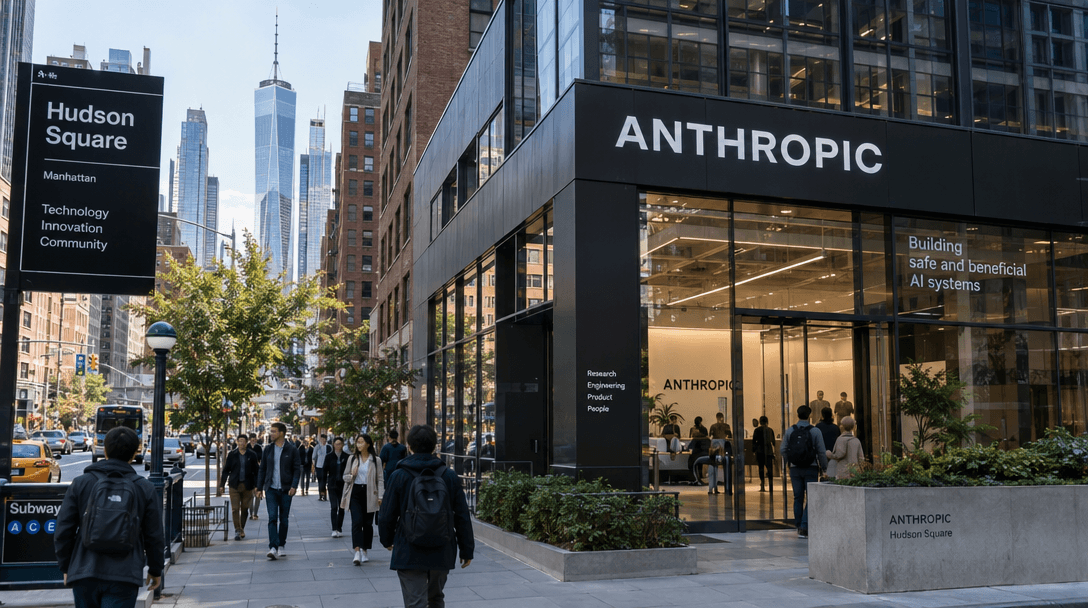
Anthropic — the AI company behind Claude and one of OpenAI's fiercest rivals — just made a massive statement about New York City's future as an AI hub. The company has finalized a 466,000-square-foot lease for an entire building in Hudson Square, Manhattan, with plans to double its local workforce by year's end.

Why This Matters for NYC Operators

While San Francisco has long dominated the AI narrative, Anthropic's expansion signals a seismic shift. New York is no longer just a financial center — it's becoming a legitimate AI powerhouse.

The numbers:

• 466,000 sq ft — that's an entire building, not a floor or two
• Workforce doubling — from hundreds to potentially 1,000+ NYC employees
• Hudson Square — the same neighborhood where Google anchored its NYC presence

The Bigger Picture: NYC's AI Office Boom

Anthropic isn't alone. The Real Deal reports that AI companies are driving Manhattan's strongest office leasing market since 2000. Other major players:

• OpenAI — expanding its NYC presence
• Google DeepMind — growing its local teams
• Dozens of AI startups — flooding into Midtown South and Hudson Square

Fortune recently noted that despite billionaires warning New York would scare off business, "Anthropic and Airbnb just made their biggest bets on the city yet."

What This Means for Local Business Owners

Talent Wars Incoming
Anthropic's expansion means more high-paying AI jobs in NYC — and more competition for technical talent. If you're hiring developers, data scientists, or AI specialists, expect salaries to climb.

Real Estate Ripple Effects
A 466K sq ft lease tightens an already constrained Manhattan office market. For businesses looking to expand or relocate, competition for quality space just got fiercer.

The AI Ecosystem Effect
When major AI companies cluster, they create ecosystems. Expect more AI meetups, conferences, and networking events in NYC — and more opportunities for local businesses to tap into AI talent and partnerships.

The Regulatory Context

This expansion comes as NYC and New York State consider aggressive AI regulation — including "kill switch" requirements and mandatory registration for AI companies. Anthropic is essentially betting that NYC's regulatory environment won't stifle growth, or that the talent and market access is worth the compliance cost.

The Bottom Line

New York City is officially an AI hub. Anthropic's 466,000-square-foot bet isn't just about office space — it's a vote of confidence in NYC's ability to compete with Silicon Valley for the future of artificial intelligence.

For NYC operators, this means more AI tools, more AI talent, and more AI competition. The question isn't whether AI will impact your business — it's whether you'll leverage this growing ecosystem or get left behind.

───

Sources:

• The New York Times: "Anthropic Expands in Manhattan, Part of an A.I. Boom in New York" (July 7, 2026)
• The Real Deal: "Anthropic finalizes Hudson Square 466K sf building lease as it grows in NYC" (Aug 5, 2026)
• New York Post: "Anthropic leases new NYC office building, set to double local workforce by end of year"
• Fortune: "Billionaires warned New York would scare off business. Anthropic and Airbnb just made their biggest bets on the city yet"

The brAIef Signal — Mapping how New York works with AI


Read More...

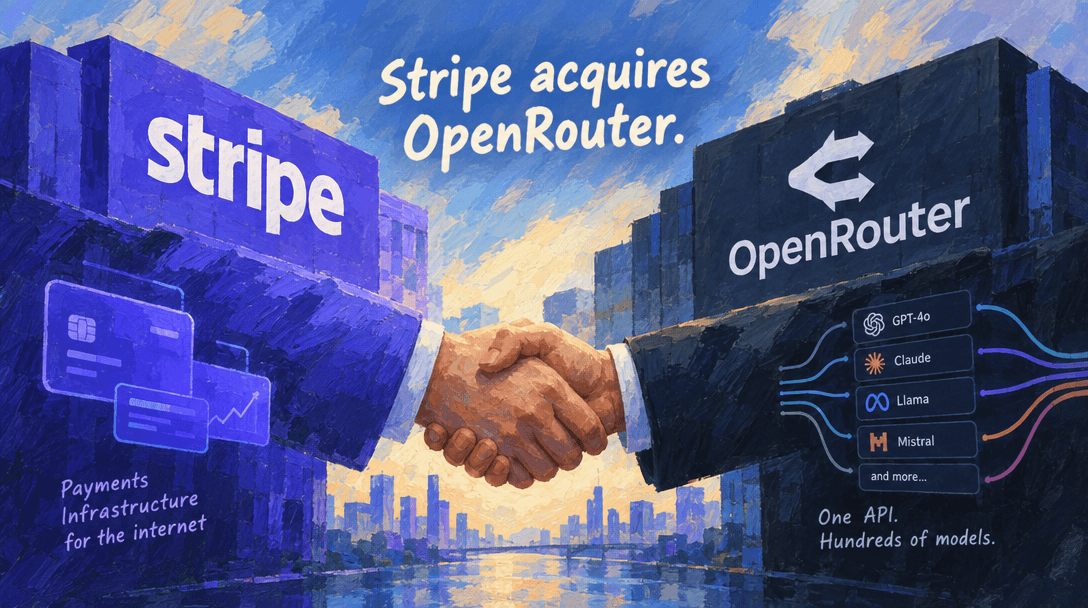
Stripe — the payments giant that powers millions of businesses — just made its biggest bet yet on artificial intelligence. The company acquired OpenRouter, a New York City-based AI model routing startup, for $7.5 billion.

That's not a typo. Seven. Point. Five. Billion.


What Is OpenRouter (And Why Should You Care)?

Think of OpenRouter as the "switchboard for AI models."

When your business uses AI — whether it's ChatGPT, Claude, or any other model — you need to route requests to the right engine. OpenRouter does that intelligently, automatically sending your query to the best, cheapest, or fastest available model.

It's essentially the middleware layer that sits between applications and AI models — and it's become critical infrastructure as companies adopt multiple AI tools.


The numbers:

• $7.5 billion acquisition price (Stripe's largest deal ever)
• $1.3 billion valuation just months earlier (OpenRouter more than doubled in value)
• $113 million raised in prior funding rounds
• NYC-based — born and built in New York


Why Stripe Bought It?

Stripe doesn't buy companies casually. They buy infrastructure.

As Yahoo Finance noted, this acquisition turns "model routing into a payments infrastructure problem" — and payments infrastructure is exactly what Stripe does better than anyone.

Here's the logic:

1. AI usage is exploding
2. Every company is becoming an AI consumer
3. AI consumption requires routing, metering, and billing
4. Stripe already handles payments for millions of businesses
5. Now Stripe can handle their AI infrastructure too

It's a classic platform play — own the infrastructure, capture the value.


The NYC Angle: Another Win for the Ecosystem

OpenRouter was a New York City startup. AlleyWatch covered their funding rounds. They built their team here. They scaled here.

This acquisition is a massive validation of NYC's AI ecosystem:

• A NYC startup built something worth $7.5 billion
• Major tech players are looking to NYC for AI acquisitions
• The city's AI companies are creating real liquidity for investors

Andreessen Horowitz — one of Silicon Valley's most prestigious VC firms — was an early OpenRouter investor. Their bet on a NYC AI startup just paid off enormously.


What This Means for Local Business Owners

AI Infrastructure Is Becoming Commoditized
Just like Stripe made online payments invisible, they're about to make AI routing invisible. For NYC businesses using AI, this could mean simpler, cheaper access to multiple models.

The "Pick and Mix" AI Era
OpenRouter's technology lets businesses use multiple AI models seamlessly. You don't need to commit to just ChatGPT or just Claude — you can route to whichever model is best for each specific task.

NYC's AI Credibility
When a NYC startup sells for $7.5 billion, it sends a signal: New York can build and exit AI companies at the highest level. Expect more VC attention, more startup formation, and more talent flowing into the city.


The Bigger Picture: AI's Infrastructure Layer

This deal reveals something important about where AI is headed.

The frontier labs (OpenAI, Anthropic, Google) build the models. But the real money might be in the infrastructure layer — the routing, billing, and management tools that let businesses actually use those models.

Stripe just bought the tollbooth on the AI highway.


➡️The Bottom Line

A NYC startup just sold for $7.5 billion to one of the most valuable private companies in the world. That's not just a win for OpenRouter's team and investors — it's a win for every NYC operator betting on AI.

The message is clear: New York isn't just consuming AI. It's building the infrastructure that powers it.

───

Sources:
The New York Times: "Stripe Buys A.I. Start-Up OpenRouter for $7.5 Billion" (Aug 19, 2026)• Bloomberg: "Stripe Clinches Over $7 Billion Deal to Buy AI Firm OpenRouter"
• Fortune: "Stripe clinches over $7 billion deal to buy AI firm OpenRouter"
• TechCrunch: "Stripe will reportedly acquire AI gateway startup OpenRouter for $7B+"
• Yahoo Finance: "Stripe Acquires OpenRouter for $7B+, Turning Model Routing Into a Payments Infrastructure Problem"
• AlleyWatch: NYC startup coverage and funding reports

───

Want more NYC AI news? Forward this to a friend who needs to stay in the loop.

The brAIef Signal — Mapping how New York works with AI


Read More...

If you're a young New Yorker trying to break into tech, the numbers are brutal: entry-level tech jobs in NYC have plummeted by nearly 50% — and AI is the primary culprit.


The City Reporter's recent investigation, titled "'Off a Cliff': AI Devours Entry-Level Tech Jobs," paints a stark picture of an industry eating its own young.


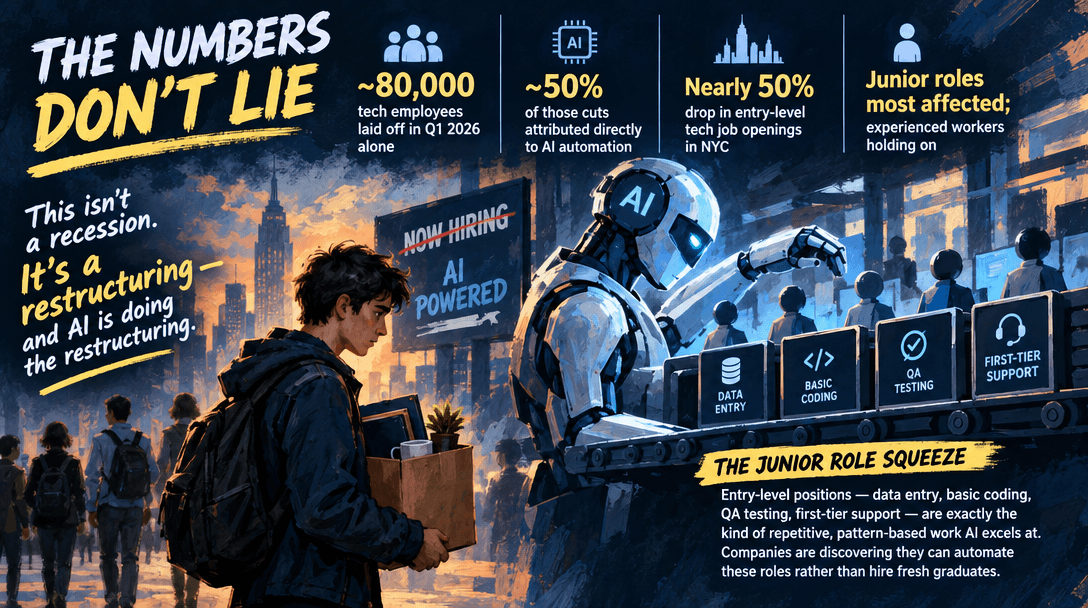
The Numbers Don't Lie

• ~80,000 tech employees laid off in Q1 2026 alone
• ~50% of those cuts attributed directly to AI automation
• Nearly 50% drop in entry-level tech job openings in NYC
• Junior roles most affected; experienced workers holding on

This isn't a recession. It's a restructuring — and AI is doing the restructuring.


What's Happening (And Why)

The Junior Role Squeeze
Entry-level positions — data entry, basic coding, QA testing, first-tier support — are exactly the kind of repetitive, pattern-based work AI excels at. Companies are discovering they can automate these roles rather than hire fresh graduates.


The Experience Premium
Paradoxically, experienced workers are holding on. Senior developers, architects, and strategists who can guide AI implementation are more valuable than ever. The gap between junior and senior has never been wider.


The NYC Context
Business Insider reports that "young New Yorkers" specifically are struggling to break into tech. In a city with sky-high rents and competitive job markets, losing the entry-level rung is devastating.


Who's Getting Hit Hardest?

The New York Post's study identified multiple fields getting "battered":

• Software engineering (junior roles)
• Data analysis (entry-level)
• Quality assurance
• Technical support
• Content moderation
• Basic graphic design

Any job that involves following established patterns, checking work against rules, or processing information in structured ways is in the crosshairs.


What This Means for NYC Business Owners

1️⃣Talent Pool Shift
The traditional pipeline of young, hungry tech talent is drying up. If your business relies on entry-level tech workers, you may need to rethink your hiring strategy — or your automation strategy.

2️⃣Opportunity for Retraining
There's a massive opportunity here for NYC businesses willing to invest in upskilling. Workers displaced by AI can be retrained to manage, prompt, and optimize AI systems — often at higher wages than their original roles.

3️⃣The Wage Compression Effect
As entry-level roles disappear, mid-level workers may find themselves competing for fewer positions. Wage pressure could affect your ability to hire and retain technical talent.

4️⃣The Policy Response (Or Lack Thereof)

NYC's government is aware of the issue. The city's official website has published analysis on "AI and New York City's Fiscal Future," recognizing that workforce displacement poses risks to tax revenue and economic stability.

But policy moves slowly — and AI moves fast.

Citizens Union's report "The Shrinking First Rung" calls for:

• Expanded tech apprenticeship programs
• AI literacy training in public schools
• Incentives for companies to hire and train junior workers
• Safety nets for displaced workers


➡️The Bottom Line

AI isn't just changing how work gets done — it's eliminating the first rung of the career ladder for many young New Yorkers.


For business owners, this creates both risk and opportunity:

• Risk: A shrinking pool of entry-level talent to grow into senior roles
• Opportunity: Access to a motivated workforce ready to be retrained for AI-era jobs

The companies that figure out how to hire, train, and retain workers in this new environment will have a massive competitive advantage.


Sources:

• The City Reporter: "'Off a Cliff': AI Devours Entry-Level Tech Jobs, As Experienced Workers Hold On" (Sep 14, 2026)
• New York Post: "Entry-level tech jobs in NYC plummet by nearly 50% — and these other fields are getting battered, too: new study"
• Business Insider: "How the AI jobspocalypse is making it harder for young New Yorkers to break into tech jobs"
• Citizens Union: "The Shrinking First Rung: How AI Is Disrupting Entry-Level Work in NYC Tech"
• Tom's Hardware: "Tech industry lays off nearly 80,000 employees in the first quarter of 2026 — almost 50% of affected positions cut due to AI"
• NYC.gov: "AI and New York City's Fiscal Future"

───

Want more NYC AI news? Forward this to a friend who needs to stay in the loop.


Read More...
brAIef Signal

© 2026 brAIef Signal.

The brAIef Signal maps how New York works with AI—for operators. We focus on real-world adoption: how businesses across NYC are actually using AI to run operations, improve margins, and move faster. From local case studies to practical workflows, events, and tools, we cut through the hype and surface what’s working on the ground.

© 2026 brAIef Signal.