NYC
Wall Street's AI Boom: Record Profits — and New Risks
|Subscribe·Archives·Current Issue
Wall Street's AI Boom: Record Profits — and New Risks
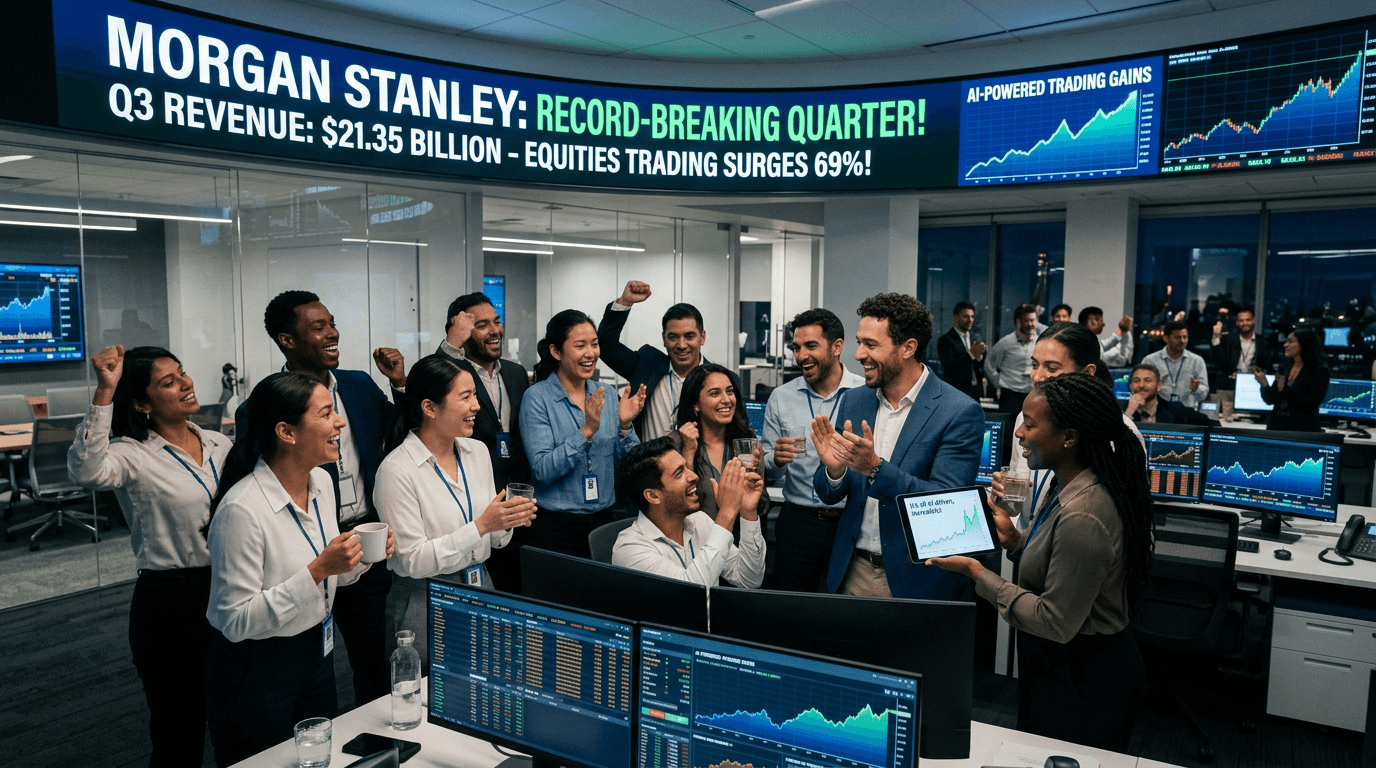
Morgan Stanley just posted its best quarter ever — and AI gets the credit.
Shinji Fuse

Shinji Fuse

Aug 18, 2026

Morgan Stanley just posted its best quarter ever — and AI gets the credit.

The investment bank reported $21.35 billion in revenue for Q2 2026, with equities trading surging 69% to $6.3 billion. Total client assets crossed $10 trillion for the first time. The driver? AI-powered trading strategies that process market signals faster than any human trader could.

The AI Trading Revolution

Wall Street's adoption of AI isn't new, but the scale is unprecedented. Firms are now using AI to:

• Analyze earnings calls in real-time, detecting sentiment shifts before markets react
• Identify arbitrage opportunities across global markets in milliseconds
• Predict price movements based on alternative data sources (satellite imagery, credit card transactions, social media sentiment)
• Automate risk management across billion-dollar portfolios

The Hidden Risk: Crowded Trades

But there's a catch. A new NYU study found that AI-driven trading is making profitable signals decay faster than ever. What used to work for 5-7 years now generates alpha for just 18 months before too many algorithms pile in and the edge disappears.

This creates a dangerous feedback loop:

1. AI finds a profitable pattern
2. Multiple firms' AIs detect the same pattern
3. Everyone trades the same signal simultaneously
4. The profit opportunity vanishes
5. AIs search for the next pattern, repeat cycle

CoreWeave's Chip Hedge

Even AI infrastructure companies are feeling the volatility. CoreWeave — the AI cloud provider — is now exploring financial hedges against memory chip price swings, treating GPU costs like commodity futures.

What This Means for NYC

For New York's financial sector, AI is simultaneously:

• A profit engine: Record trading revenues
• A systemic risk: Correlated algorithmic behavior could amplify market crashes
• A talent war: Firms are poaching AI researchers from tech companies at unprecedented salaries

For Local Business Operators

Even if you're not trading stocks:

• Credit markets: AI-driven lending decisions affect small business loans
• Insurance: AI risk models influence commercial premiums
• Real estate: Wall Street bonuses (boosted by AI profits) drive NYC property demand



Read More...

Twelve nurses. Six years of experience each. Laid off and replaced by software.

That's what happened at Montefiore Hospital in the Bronx this July, marking one of the first documented cases of AI directly replacing healthcare workers in New York City.

What Happened

The nurses, all members of the New York State Nurses Association (NYSNA), were laid off in early July 2026 after the hospital implemented Datavant AI software for utilization review — the process of determining whether patient treatments are medically necessary and covered by insurance.

The timing was particularly bitter: the nurses had just won a new contract through a contentious strike, and some received layoff notices on National Nurses Day (May 6).

The Hospital's Defense

Montefiore denies the AI replaced the nurses. A spokesperson called the software a "technology investment" for "nonclinical paperwork" and insisted the layoffs were part of routine restructuring.

But the nurses tell a different story. They say their jobs — reviewing patient cases, communicating with insurers, and ensuring proper coverage — were absorbed by the AI system.

Why This Matters

Utilization review is a critical gatekeeping function in American healthcare. When AI makes those decisions:

• Patient care suffers: Nurses say the software lacks clinical judgment for complex cases
• Appeals get harder: Denied claims require human expertise to challenge
• Precedent is set: Other hospitals are watching Montefiore closely

The Union Response

NYSNA has filed grievances alleging contract violations. The union argues that if AI can do the work, the nurses should be retrained and redeployed, not eliminated.

For NYC Healthcare Operators

If you run a medical practice or clinic:

• Audit your AI tools: Know what decisions are being automated
• Document everything: AI denials need human appeal pathways
• Watch the precedent: Montefiore's case could influence hospital AI adoption nationwide

Source: The Guardian, The Real News — July 2026

───

The brAIef Signal maps how New York works with AI — for operators who need to know.


Read More...

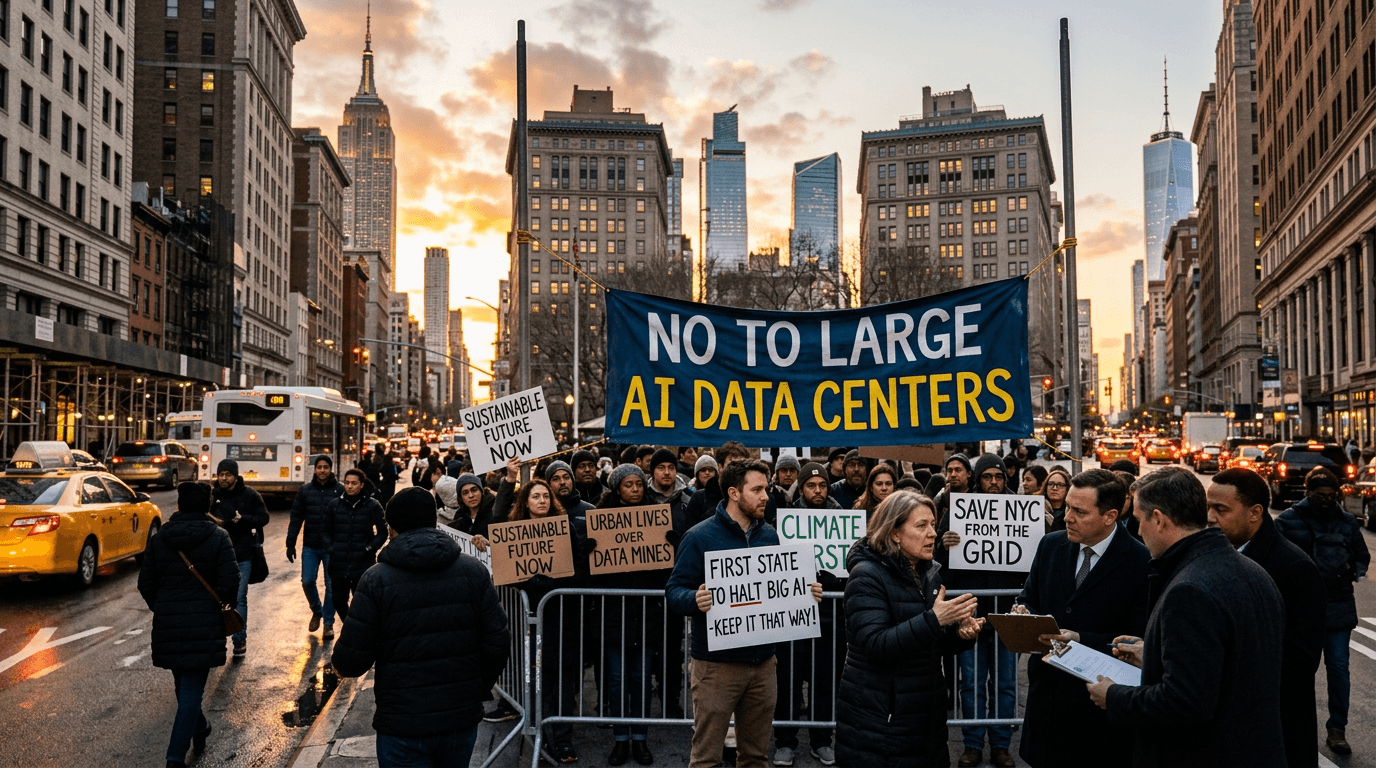
Governor Kathy Hochul just made New York the first state in the nation to slam the brakes on large-scale AI data center construction.

On July 10, 2026, Hochul signed an executive order imposing a one-year freeze on permits for new hyperscale data centers — defined as facilities drawing 50 megawatts or more of power. The move affects 48 projects currently in the New York Independent System Operator (NYISO) queue, representing roughly 12 gigawatts of planned capacity.

Why Now?

The decision follows months of heated debate about the energy demands of AI infrastructure. A legislative bill (S10642/A11560) passed the state legislature on June 4, but Hochul chose to act via executive order rather than wait for the standard legislative process.

The ban targets the massive facilities powering AI training and inference workloads — the same infrastructure that companies like OpenAI, Google, and Meta rely on to run their models.

The Pushback

Former President Donald Trump immediately condemned the move, calling it a "terrible decision" that would drive AI investment out of New York. Industry groups warn the freeze could cost the state billions in economic development and push AI companies to friendlier jurisdictions like Texas or Arizona.

What This Means for NYC Operators

For New York-based businesses building AI tools, the ban creates uncertainty:

• Latency concerns: Delayed local infrastructure means more reliance on out-of-state data centers
• Cost implications: Less competition for data center space could mean higher cloud computing costs
• Regulatory signal: New York is positioning itself as a cautious regulator of AI expansion, not just a tech hub

The Bigger Picture

This isn't just about electricity. It's about whether states will treat AI infrastructure like critical utilities — with all the permitting scrutiny that entails — or let the market build unchecked.

New York chose regulation. Other states are watching.

───

The brAIef Signal maps how New York works with AI — for operators who need to know.


Read More...

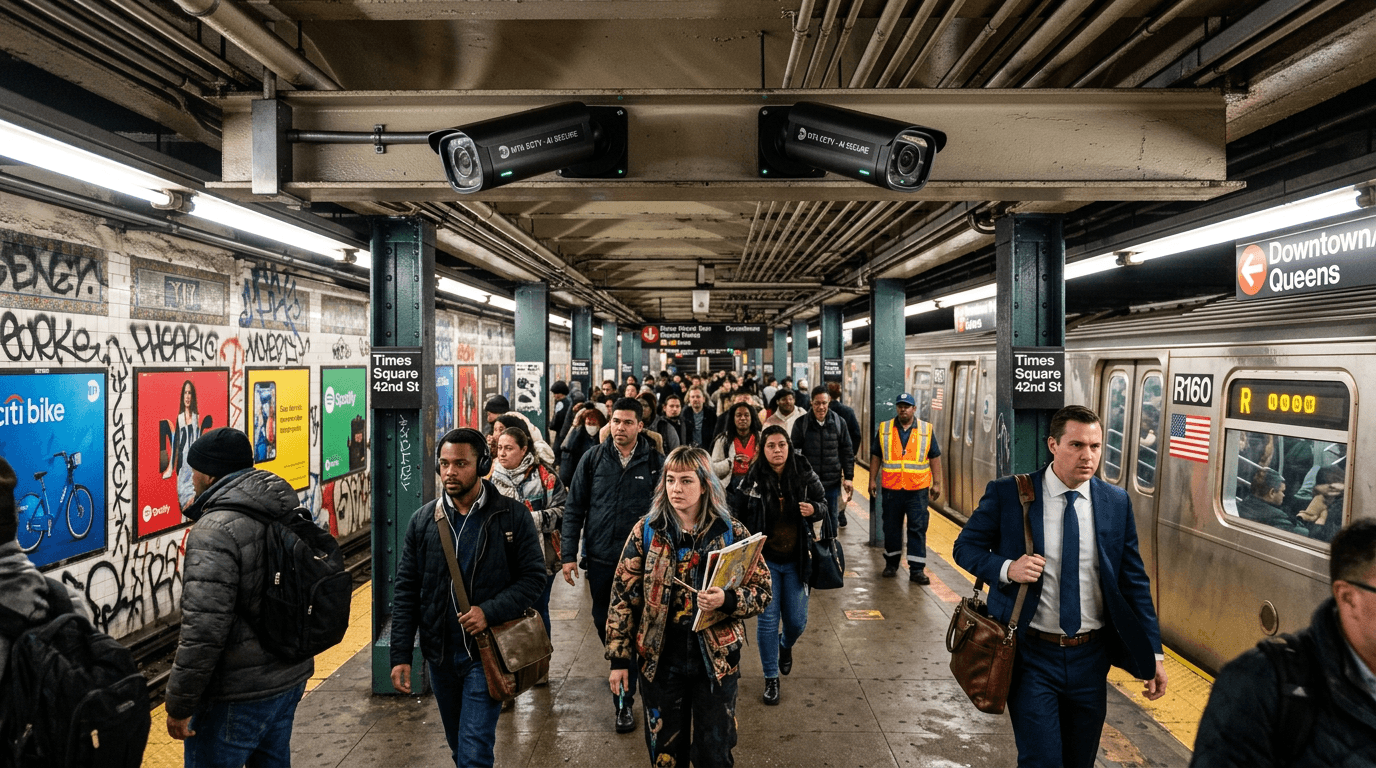
The MTA is rolling out AI-powered surveillance across the New York City subway system — and this time, it's not just about counting turnstile hoppers.

New AI cameras are being deployed to detect riders entering restricted zones, including employees-only areas, track beds, and other off-limits sections of the transit network. The technology can identify individuals even if they've already paid their fare and are legally in the system.

From Safety to Enforcement

The MTA has been testing "track intrusion detection" technology since early 2025, but the new deployment marks a significant expansion. The AI systems can:

• Detect unauthorized personnel on tracks in real-time
• Alert control centers within seconds of intrusion
• Distinguish between workers, emergency personnel, and trespassers
• Integrate with existing camera networks across 472 stations

Why This Matters

Subway track incidents remain a persistent safety issue. In 2024, there were over 200 track intrusions reported, resulting in delays, injuries, and fatalities. The MTA hopes AI detection will reduce response times and prevent accidents before they happen.

But the deployment also raises questions about scope creep. If AI can catch trespassers today, what else will it be trained to detect tomorrow?

Privacy Concerns

Transit advocates are watching closely. The MTA has not released details about data retention policies, who has access to the AI outputs, or whether the system uses facial recognition beyond simple intrusion detection.

The agency says the technology is "safety-focused," but critics note that AI surveillance systems tend to expand their capabilities over time.

For NYC Businesses

If you operate near subway stations or rely on MTA access for employees, expect:

• Faster emergency response to track incidents
• Potential changes to station access patterns
• More visible security technology in transit hubs


Source: MSN News, Okdiario — July 2026


Read More...
brAIef Signal

© 2026 brAIef Signal.

The brAIef Signal maps how New York works with AI—for operators. We focus on real-world adoption: how businesses across NYC are actually using AI to run operations, improve margins, and move faster. From local case studies to practical workflows, events, and tools, we cut through the hype and surface what’s working on the ground.

© 2026 brAIef Signal.