
Shinji Fuse
Sep 1, 2026
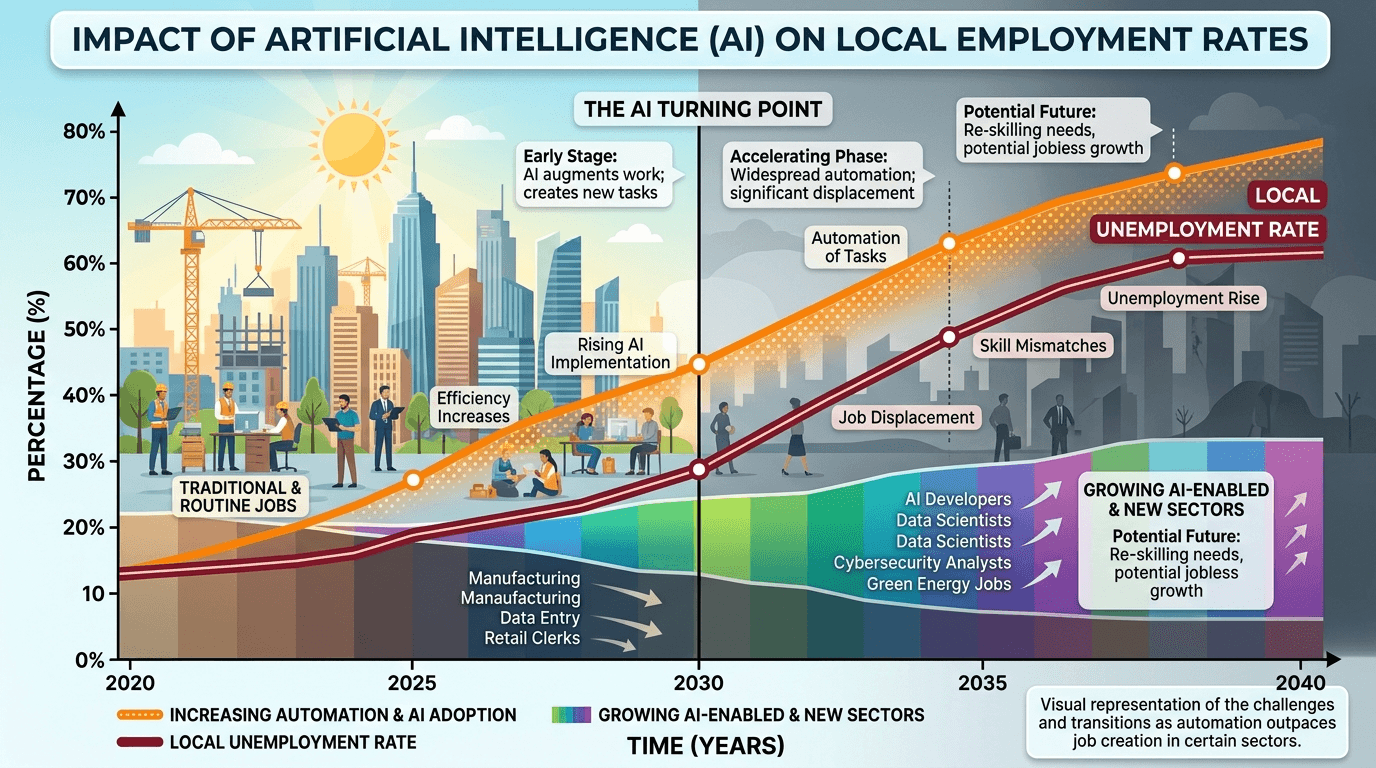
Brooklyn businesses are adjusting to new state requirements as the buzz around artificial intelligence and its effects on local employment grows.
The recently introduced assembly bill a9581b mandates annual AI job impact reports, compelling employers to detail how AI is reshaping their workforce—from staff reductions and role changes to vacancies resulting from automation.
This legislation could notably influence hiring strategies and budget planning in both small startups and established tech firms across the borough.
Following hundreds of automation-linked job cuts in New York last year, the state aims to capture subtle workforce shifts that previously went unreported.
Some community leaders hope that consistent AI workforce tracking will provide vital data to support retraining initiatives and protect workers.
Uncertainties remain about tracking "AI-caused" changes, especially for businesses just beginning to explore automation.
Brooklyn must now balance innovation with worker security in this fast-changing digital landscape. Read More... |
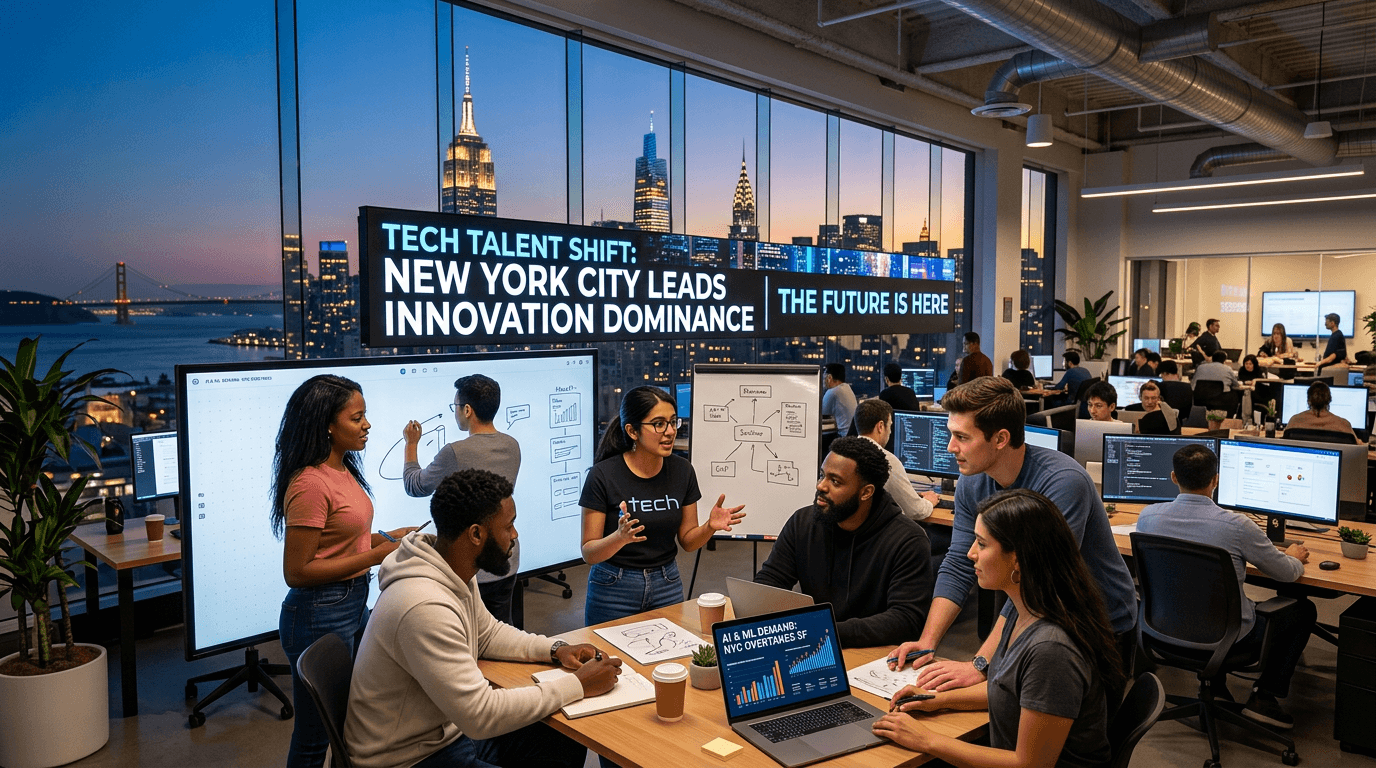
**New York Surpasses San Francisco as North America’s Premier Tech-Talent Hub** New York State has officially overtaken the San Francisco Bay Area as North America’s largest tech-talent workforce by headcount, adding 30,640 technology workers over the past three years. The milestone, confirmed by Fortune, marks a significant redistribution of the continent’s technological labor and signals the growing dominance of legacy industries in the AI era. While artificial intelligence roles are disproportionately fueling this expansion, the growth narrative extends well beyond the five boroughs. Across Upstate New York, Long Island, and the Hudson Valley, a diversifying mix of fintech startups, biotech innovators, and cloud-computing firms are scaling engineering teams. Corporate investment–driven largely by Wall Street’s urgent need to integrate AI into trading, risk management, and client-services infrastructure–has made the state a magnet for data scientists, machine-learning engineers, and quantitative analysts. Yet the surge is not exclusive to finance; it reflects a broader tech expansion across sectors, reinforced by state-funded workforce initiatives and university-industry partnerships that are cultivating talent pipelines far from Manhattan’s skyline. San Francisco remains an enduring powerhouse of venture capital, product incubation, and open-source innovation. However, in raw headcount, New York’s sustained hiring momentum–particularly in AI-augmented finance, cybersecurity, and infrastructure software–has edged ahead. Fortune’s analysis highlights that traditional financial institutions are tripling their AI headcounts to maintain competitive edges, positioning New York at the intersection of capital markets and cutting-edge technology. This shift does not diminish the Bay Area’s influence but rather illustrates a maturing tech ecosystem where scale and industry diversification rival Silicon Valley’s agility. As AI demand accelerates and companies seek talent near data-rich business operations, New York’s unique combination of financial depth, academic resources, and cross-sector demand places it at the forefront of North America’s tech labor market. The competition for top talent intensifies as both regions adapt to remote-work norms and evolving AI skill requirements. For workforce planners and corporate strategists, the NY-SF dynamic offers a clear signal: tech talent is becoming increasingly decentralized, with New York poised to lead in workforce volume while maintaining its identity as a hub for industry-integrated innovation.
Read More... |

Self-improving language models are quietly revolutionizing New York City’s tech landscape, led by influential local universities embracing closed-loop AI systems.
These advanced frameworks, structured around data collection, selection, improvement, and evaluation, enable AI to refine itself with minimal human input.
Collaborations among NYC research teams are propelling these systems from theory into practice, while probing both their potential and the ethical risks involved.
With startups and major labs exploring their disruptive impact, industries—from finance to healthcare—are anxiously tracking the technology’s development.
Debate continues at local meetups and workshops over whether self-improving models should monitor themselves, or if ongoing human oversight remains vital for safety.
This discussion feels increasingly urgent in a city where AI already influences public safety and real estate analytics.
As innovation races ahead, New Yorkers and city leaders are focused on ensuring these advances serve the public good. Read More... |

Governor Hochul’s initiative delivers record AI performance jumps—11× training, 40× inference, 8× storage—and positions New York as a national model for public-interest, state-led research infrastructure. Read More... |