NYC
13,500+ NYC Businesses Pack Javits Center
|Subscribe·Archives·Current Issue
13,500+ NYC Businesses Pack Javits Center
s a Small Business Boom Brewing?
Shinji Fuse

Shinji Fuse

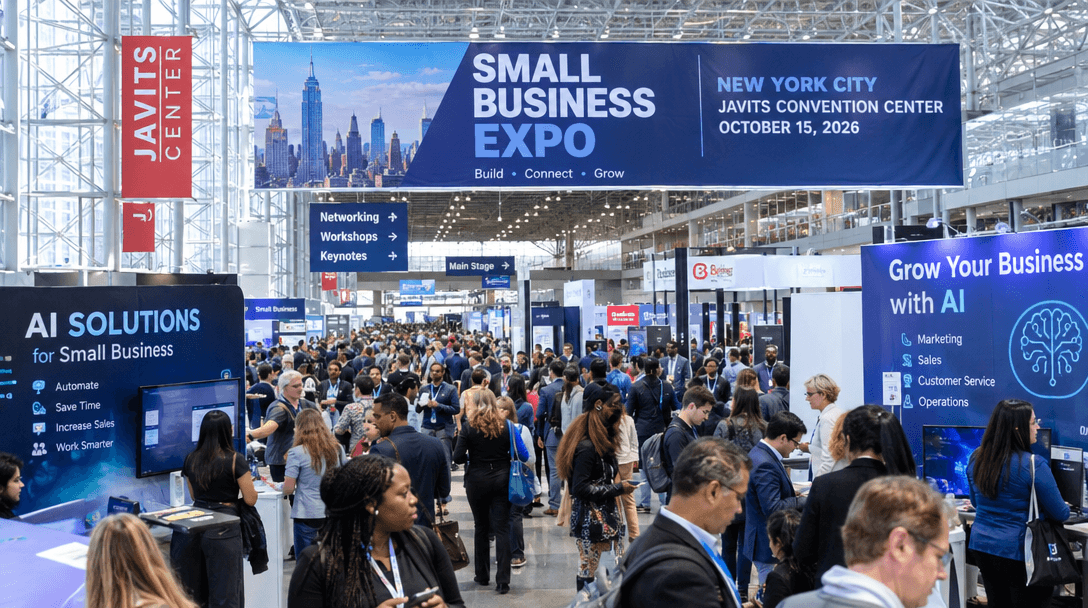
13,500+ NYC Businesses Flood Javits Center for Small Business Expo — AI Takes Center Stage

What happened: More than 13,500 businesses registered for the Small Business Expo's first-ever fall NYC show on October 15, 2026, at the Javits Convention Center — a clear signal that demand for business growth resources, especially AI solutions, is surging among local entrepreneurs.

Why it matters: This marks the first year Small Business Expo has hosted two NYC events (spring and fall), added specifically because the spring show maxed out capacity. The turnout suggests NYC's small business community is actively seeking tools to compete — and AI is the star attraction.

───

The Numbers

• 13,500+ registered businesses — for a single-day, free-admission trade show
• First fall show ever in NYC — doubling the annual event calendar due to demand
• General admission: Free, lowering barriers for early-stage entrepreneurs

AI Front and Center

The expo leaned heavily into practical AI applications for small business owners:

• AI Keynote (11:15 a.m.): Takicha and Warrick Roundtree of The Brand Amplifiers, presented by Verizon Small Business Digital Ready, focused on how entrepreneurs can "save time, improve productivity and grow their businesses" using AI tools.
• Practical AI sessions throughout the day covered customer acquisition, hiring, and operational efficiency — the exact pain points where AI delivers immediate ROI for resource-constrained businesses.

Shark Tank Founders Share Real-World Lessons

The 1 p.m. panel "Shark Tank Success Stories: Behind the Pitch" featured:

• Juan Salinas — Founder of P-nuff Crunch
• Vlad Smolyanskyy — Founder of Pinblock
• Moderated by Nicole Denise of CoAgency

The session promised candid conversation about what happened before and after their TV pitches — the kind of operational reality that resonates with working business owners more than glamorized success stories.

What This Signals for NYC's Business Ecosystem

Zachary Lezberg, Founder & CEO of Small Business Expo, framed it directly: "Reporters can hear directly from New York business owners about today's challenges and see how they're exploring AI, finding customers and growing their businesses."

The 13,500+ turnout isn't just a big number — it's evidence that:

1. NYC small businesses are investable — They're showing up, engaging, and actively seeking solutions
2. AI adoption is moving downstream — It's no longer just enterprise tech; it's becoming standard toolkit for Main Street
3. The support infrastructure is scaling — Verizon, Amazon Business, and other major sponsors are betting on this audience

The Bigger Picture

Small Business Expo has been running since 2008 and hosts events in major cities nationwide. The decision to add a second NYC show — and draw 13,500+ registrations five months after the spring event — suggests the post-pandemic small business recovery isn't just happening; it's accelerating, and technology adoption is driving it.

For NYC operators, the message is clear: The competitive landscape is shifting fast. Businesses that adopt AI tools for customer service, marketing automation, and operational efficiency are becoming the new baseline — not the exception.

───

Source: EIN Presswire — Steven Bryant, Small Business Expo, October 13, 2026


Read More...

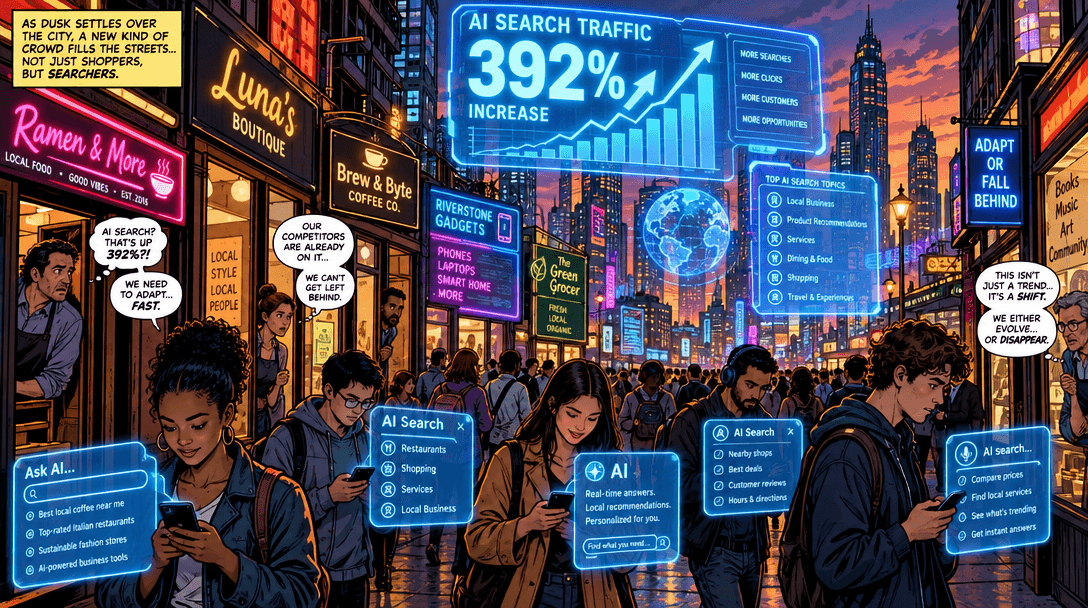
AI Search Usage Surged 392% in 13 Months — Local Businesses That Don't Adapt Will Disappear

What happened: AI search traffic grew 392% year-over-year across 1.5 million sessions tracked by digital agency IDHL, with transactions from AI search up 553%. The data shows AI search is no longer experimental — it's becoming the primary way consumers discover and buy from brands.

Why it matters for NYC operators: If your business isn't optimized for AI search, you're becoming invisible to customers who now use ChatGPT, Gemini, and Claude as their starting point — not Google.

───

The Numbers

• 392% YoY growth in AI search sessions (July 2025–July 2026)
• 312% revenue increase from AI search traffic
• 553% transaction growth — 21,141 total transactions via AI search
• 14x faster growth than organic search (which only grew 28%)
• 91% of AI search traffic comes from ChatGPT

What This Means for Local Businesses

The report reveals a critical shift: AI search is following seasonal demand patterns just like traditional search. For NYC businesses, this means:

• Gifts and travel peak in December
• Most retail categories peak in May and June
• Trade/DIY peaks in July (653% growth)
• Home & Garden peaks in July (588% growth)
• Entertainment peaks in May (419% growth)
• Beauty peaks in June (418% growth)

The Real Threat: Platform Diversification

ChatGPT still dominates at 91%, but Google Gemini, Anthropic Claude, Microsoft Copilot, and OpenAI Search are gaining fast. Your customers aren't just on one platform anymore — and each AI engine surfaces different results based on different signals.

Why Reddit Matters (But Isn't Everything)

One stat that should wake up every business owner: users chose Reddit results 23 billion times in Google searches last year. Why? Because AI engines trust real opinions from real people.

Chris Shelbourn, organic search director at IDHL, explains: "AI engines tend to trust the kind of content Reddit is full of, which is real people sharing real experiences."

But he adds an important caveat: while participating in relevant Reddit conversations has become a viable tactic through generative engine optimization, "it is perhaps not the 'silver bullet' some commentary suggests." Large language models "regularly cite dozens of other third-party sources, which can vary substantially by industry or topic, not just Reddit."

The Real Strategy: Be Everywhere Credible

AI engines pull from review sites, industry directories, news coverage, academic sources, and community platforms — depending on your industry. A restaurant might get cited from Yelp and local food blogs. A contractor might surface through HomeAdvisor and trade associations. A B2B service might appear via LinkedIn and industry publications.

The Bottom Line

AI visibility doesn't start when someone asks ChatGPT a question. It starts months earlier with the content, reviews, and recommendations that shape how your brand is understood online.

For NYC local businesses, the message is stark: optimize for AI search now or watch your competitors take the customers you can't reach.

───

Source: MediaPost — Laurie Sullivan, September 30, 2026
Report: State of AI Search 2026 by IDHL


Read More...

Meta Just Gave Every Small Business an AI Employee — And It's Free

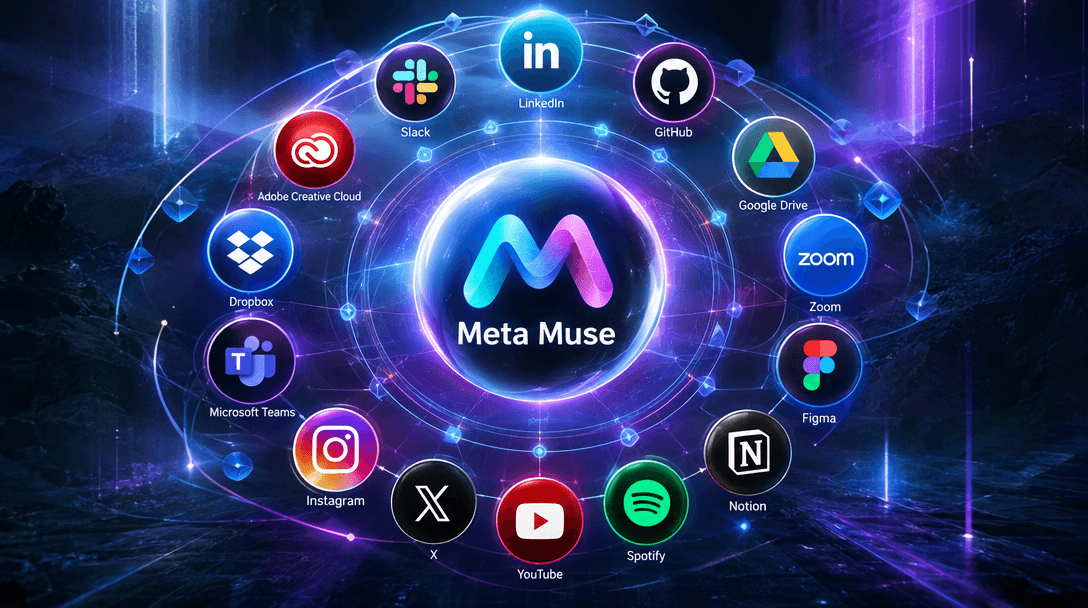
What happened: Meta launched Muse for Small Business on September 29, connecting its AI agent to the tools entrepreneurs already use. Instagram analytics, Facebook Pages, Meta ads, Canva, bookkeeping software, and more. The goal: automate the busywork so owners can focus on what actually makes money.

Why it matters: This isn't another chatbot. Muse is an AI operator. It works in the background, understands your brand voice, knows what customers ask, and completes tasks across multiple platforms. For resource-strapped NYC small businesses, this could replace hours of manual work every week.

───

What Muse Actually Does

Meta built Muse to solve a specific problem: small business owners are short on hours, not ideas.

The AI agent connects to:

• Instagram Professional account analytics
• Facebook Pages
• Meta ad accounts
• Canva (templates, design tools)
• Dozens of other business tools via connectors
• Custom connectors for services not yet supported

Once connected, Muse already understands:

• What you sell
• What your brand sounds like
• What customers keep asking about

Real-World Example

Tom Mulholland owns Mulholland Grocery in Malvern, Iowa. He works 65 hours a week and was stuck handling tasks only he could do — until Muse took over several roles.

"I need to free up time for the work that actually makes my business money: cutting the steaks, making the sausages," Mulholland said. "I'm very good at what I do, but that doesn't mean I'm good at all of the different roles a small business owner has to play, and Muse is taking over a few of them."

The Canva Connection

Canva co-founder Cameron Adams sees Muse as a genuine productivity leap.

"The real magic happens when it's fully connected to your existing work, your context and your brand. By connecting Muse with Canva, all of that becomes part of your conversations."

This means a business owner can describe an idea in plain English and Muse helps shape it into on-brand, editable content using Canva templates.

Pricing: The Disruptive Part

Muse is free for most features. Aligned with Meta's stated goal to "put superintelligence in the hands of as many people as possible." Premium subscription plans exist for heavier users, but the core functionality costs nothing.

What This Means for NYC Operators

For New York's small business owners, Muse represents a shift from using AI to delegating to AI. Instead of learning prompts or managing multiple tools, you describe what you need and Muse executes across platforms.

The implications:

• Marketing: Automated ad management, content creation, performance tracking
• Customer service: AI that knows your business and responds appropriately
• Operations: Connected workflows across bookkeeping, inventory, scheduling
• Time savings: Hours back for the work that actually generates revenue

The Bigger Picture

Meta is building Muse as part of a dedicated enterprise AI business. More connectors, more skills, and more automation are coming.

For small businesses that adopt early, this creates a compounding advantage. The AI learns your business, your customers, and your workflows over time.

For those that don't? The gap between AI-enabled competitors and manual operators will widen fast.

───

Source: Meta Newsroom — September 29, 2026

Read More...

Your Bookkeeper Just Got Replaced by an AI — And It Costs $29/Month

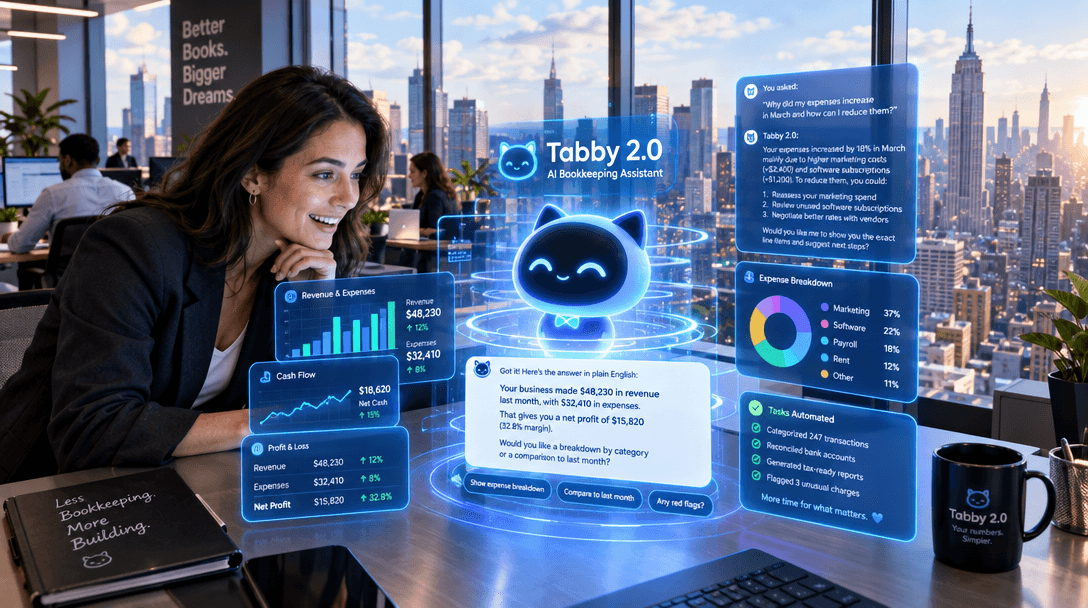
What happened: Tabby, a NYC-based AI bookkeeping startup, launched Tabby 2.0 on October 12. The headline feature is Tabby Talk — an AI agent that answers financial questions in plain English and completes bookkeeping tasks automatically.

Why it matters: For NYC small business owners drowning in receipts, invoices, and tax prep, this could eliminate hours of weekly admin work. No accounting knowledge required.

───

What Tabby Talk Actually Does

Tabby Talk works like a personal bookkeeper and CFO. Business owners ask questions in plain English and get instant answers.

It can complete tasks like:

• Tax estimates
• Unpaid invoice tracking
• Invoice generation
• Financial reports

No more learning accounting software. No more guessing at quarterly taxes. Just ask and get answers.

Built for Owners, Not Accountants

Founder Ahad Ali spent over a decade running a CPA firm serving small businesses. He saw the problem firsthand.

"Every bookkeeping tool before this one was built for someone who already understands accounting," Ali said. "Tabby Talk is built for the owner who never wanted to."

This is the key shift. Previous tools assumed you knew debits from credits. Tabby assumes you don't — and doesn't make you learn.

The Numbers

• 6,000+ small business users since launching July 2025
• 200+ accounting firms using Tabby for Accountants
• NYC-based — founded by Ahad Ali, CPA and Shah Paran
• TechCrunch Startup Battlefield 200 selection for 2026

Not Just for Solo Owners

Tabby for Accountants lets bookkeeping firms manage multiple clients from a single AI-native dashboard. This means your accountant can work faster and charge less — or handle more complex work for you.

The Bigger Picture

Tabby joins a growing wave of AI tools targeting small business operations:

• Meta Muse — AI agent for marketing and operations
• QuickBooks AI — Intuit's growing automation features
• Xero + AI — Competing bookkeeping automation

The difference: Tabby was AI-native from day one. It wasn't retrofitted with AI features. It was built around the idea that small business owners should never have to think like bookkeepers.

What This Means for NYC Operators

New York's small business owners face some of the highest costs in the country. Rent, labor, insurance — everything costs more here.

AI bookkeeping won't lower your rent. But it can:

• Free up 5-10 hours/week currently spent on financial admin
• Reduce accounting fees by handling routine tasks first
• Prevent costly mistakes like missed tax deadlines or unpaid invoices
• Provide real-time visibility into cash flow and profitability

For a business running on thin margins, that's the difference between surviving and thriving.

The Bottom Line

Bookkeeping is becoming a solved problem. The tools that cost $500+/month and required a part-time bookkeeper are being replaced by AI agents that cost less than a weekly coffee habit.

For NYC small businesses, the question isn't whether to adopt AI bookkeeping. It's how fast you can implement it before your competitors do.

───

Source: Markets Insider — October 12, 2026


Read More...
brAIef Signal

© 2026 brAIef Signal.

The brAIef Signal maps how New York works with AI—for operators. We focus on real-world adoption: how businesses across NYC are actually using AI to run operations, improve margins, and move faster. From local case studies to practical workflows, events, and tools, we cut through the hype and surface what’s working on the ground.

© 2026 brAIef Signal.