
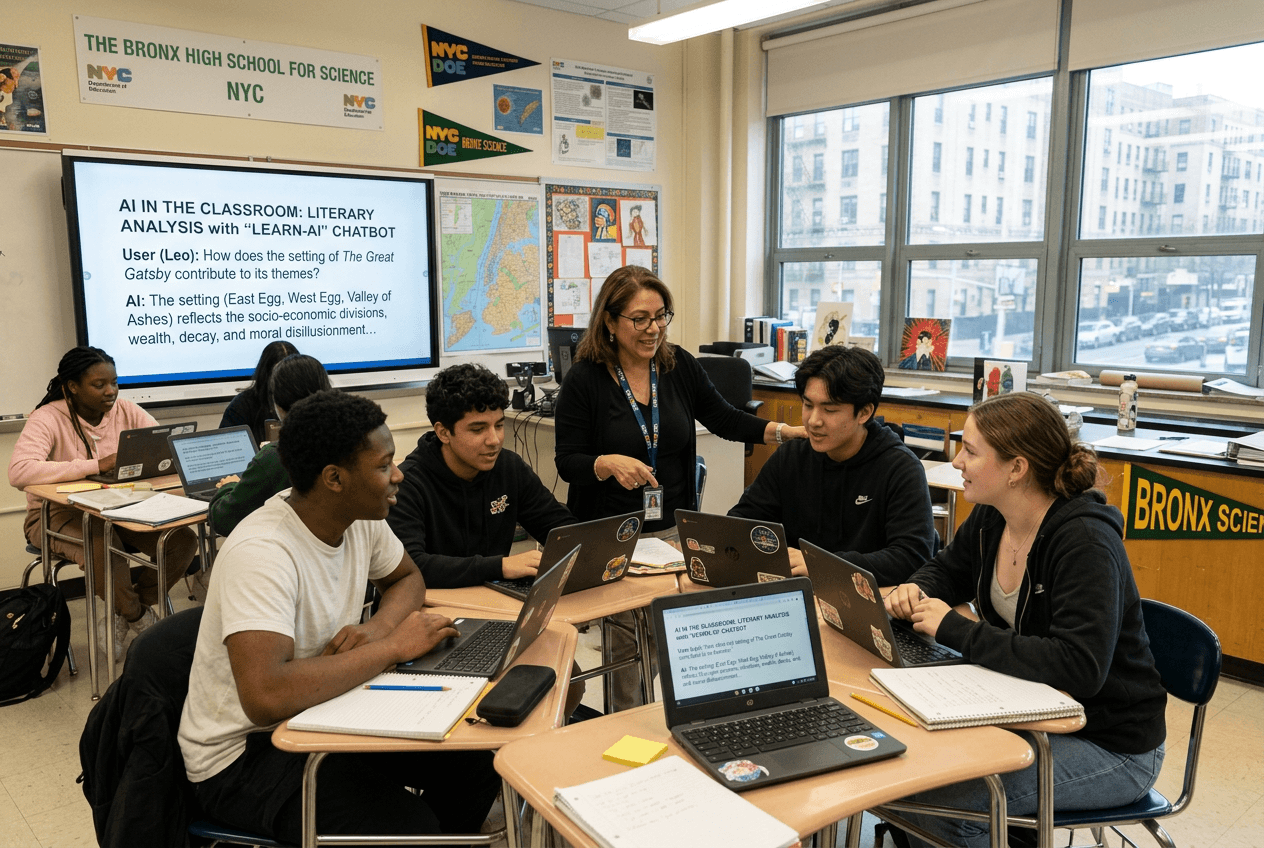
Artificial intelligence education and its impact in NYC
Exploring ai in schools and education technology risks
In March 2026, New York City Public Schools (NYCPS) unveiled preliminary guidelines for integrating artificial intelligence (AI) into classrooms, sparking a wave of concern among parents and educators. The draft, which introduced a 'traffic light' framework to categorize AI applications, faced criticism for insufficiently addressing the potential risks associated with AI in education.
Chancellor Kamar H. Samuels acknowledged the oversight, admitting that the initial guidance failed to fully grasp the community's apprehensions. He emphasized the need for a more cautious approach, particularly regarding AI use among younger students aged three to five. Samuels described AI as 'the most invasive technology that we’ve seen,' underscoring the urgency of addressing these concerns.
The 'traffic light' framework delineates AI applications into three categories:
**Red Light**: Prohibited uses, including decisions about student placement, discipline, and assessments.
**Yellow Light**: Uses requiring careful judgment, such as analyzing student data and generating translations, which must be reviewed by qualified staff.
**Green Light**: Approved uses, like assisting educators with lesson planning and drafting communications.
Despite these guidelines, the community's response has been largely negative. Public forums have seen parents and educators voicing strong opposition, with a petition calling for a two-year moratorium on AI in schools amassing over 3,000 signatures. Critics argue that the guidance inadequately addresses the risks AI poses to student privacy, equity, and the quality of education.
In response to the backlash, NYCPS extended the public feedback period, receiving over 6,000 comments by May 8, 2026. The majority of feedback came from educators and parents, highlighting widespread concern. Samuels acknowledged the rapid shift in public sentiment and the need to rebuild trust through transparent and responsive policy-making.
As NYCPS revises its AI guidance, the focus remains on balancing technological innovation with the imperative to protect students and maintain educational integrity. The final version of the AI guidance is anticipated to reflect a more cautious and community-informed approach, aiming to address the complex challenges AI presents in educational settings. |
0 Comments
Join the conversation
Be the first to comment
Share your thoughts above.